THE BUYER'S GUIDE / SELECTION
Choosing the Right Self Aligning Roller for Belt Conveyor: Working Requirements and Integration Fit
Selecting the correct self aligning roller for belt conveyor applications depends on matching the correction mechanism, material construction, and bracket geometry to the conveyor's environment and operating load. This guide explains the key selection criteria—working environment, belt deviation pattern, mechanical structure, and maintenance needs—and maps them to the confirmed Friction Self-Aligning Bracket and Self Aligning Friction Roller available from Hebei Roule Transport Machinery Manufacturing Co.,Ltd.

Working environment and exposure conditions: evaluate humidity, dust, corrosive materials, and impact load to determine appropriate bracket material grade (stainless steel, alloy, or standard steel) and whether a V-shaped discharge or buffer roller configuration is required.
Belt deviation pattern and correction mechanism fit: distinguish between dynamic/continuous lateral drift requiring angular bracket adjustment and periodic deviation that can be addressed by roller-level friction-surface correction; match the product's correction principle to the observed deviation cause.
Mechanical construction and structural integration: confirm that the bracket or roller assembly geometry matches the existing conveyor frame width and load class, and verify that adjacent components (standard rollers, belt cleaners, gear reducer) are in acceptable condition to allow the self-aligning device to function as designed.
Maintenance access and service life requirements: assess available maintenance access and desired service interval; the Self Aligning Friction Roller requires no special tools, while the Friction Self-Aligning Bracket is optimized for access but requires periodic angle inspection.
What Is a Self Aligning Roller for Belt Conveyor Systems?
A self aligning roller for belt conveyor systems is a component designed to detect and correct lateral belt drift automatically, without manual adjustment or system shutdown. Misalignment is one of the most common problems in large-scale conveying operations: uneven material distribution, equipment vibration, or variable belt tension can all pull the belt off its intended track. Left uncorrected, this causes edge wear, accelerated belt damage, and unnecessary downtime.
Two distinct but complementary products address this problem on belt conveyors: the Friction Self-Aligning Bracket and the Self Aligning Friction Roller. Understanding how each works—and where each applies—is the starting point for a sound procurement decision.
How the Friction-Based Correction Mechanism Works
The Friction Self-Aligning Bracket operates through a friction-based correction mechanism. When the belt drifts laterally, the bracket's friction roller detects the misalignment and automatically adjusts its angular position. This gentle, continuous correction prevents belt damage, reduces edge wear, and maintains a consistent conveying line without human intervention.
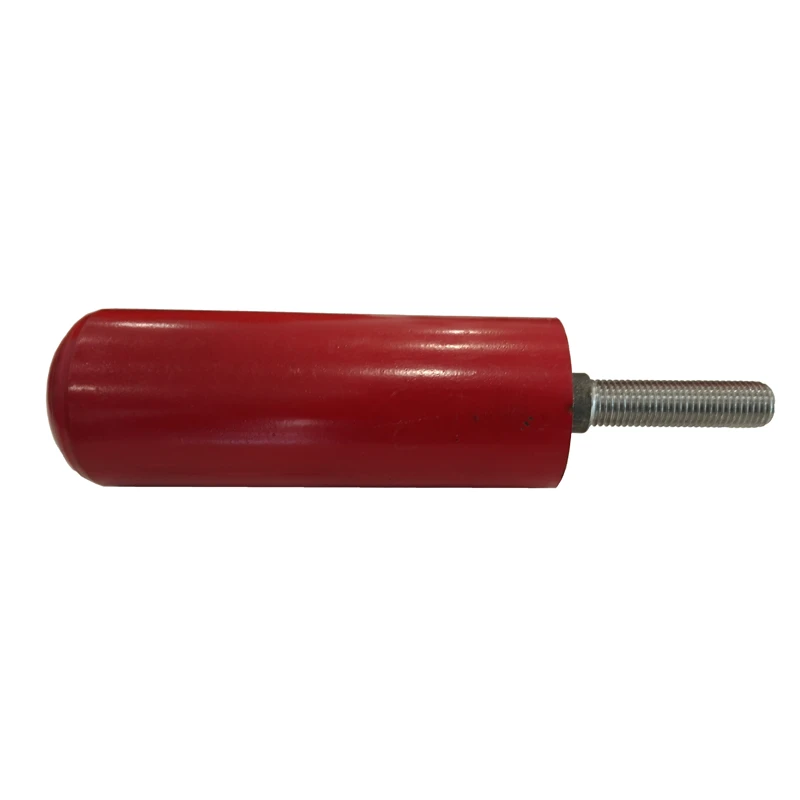
The Self Aligning Friction Roller works on a related principle: the rubber-covered drum generates controlled frictional force against the moving belt surface. Through the interplay of friction resistance and drum curvature, the roller resists and corrects deviation, keeping the belt surface smooth and stable. Because the rubber layer has strong adhesion to the roller body, it does not detach under dynamic conditions.
Key Selection Criteria
1. Working Environment and Exposure Conditions
The operating environment is the first filter when choosing a self aligning roller for belt conveyor installations.
- High humidity and coal transport: The Friction Self-Aligning Bracket uses a patented V-shaped discharge structure that prevents coal slurry adhesion and reduces shutdown cleaning frequency. For port or marine environments, stainless steel brackets with salt-spray-resistant coatings provide long-term durability in high-humidity conditions.
- Dusty or abrasive environments: The bracket incorporates corrosion-resistant materials—stainless steel and alloys—specifically designed for mining and metallurgical conditions. The Self Aligning Friction Roller's rubber surface coating also provides wear resistance for dusty or abrasive environments and can operate across various conveyor types without special tooling.
- Impact-heavy loading zones: Bracket groups equipped with buffer rollers can absorb material impact and reduce the effect of equipment vibration on the belt—relevant for mining transport where bulk materials are dropped onto the belt at high feed points.
2. Belt Deviation Pattern and Correction Need
Understanding how and why the belt drifts determines which mechanism is appropriate.
- Continuous or dynamic lateral drift driven by uneven loading or variable tension calls for a bracket-type solution whose angular correction is continuously active. The Friction Self-Aligning Bracket adjusts roller position as a function of belt position, providing a self-correcting loop that remains active throughout operation.
- Periodic or moderate deviation where the belt needs a corrective force applied along its running surface is well served by the Self Aligning Friction Roller, which uses its friction surface curvature to generate a centering force directly on the belt.
- High-load, continuous-operation systems benefit from bracket geometry optimized for maximum sensitivity and stability, as found in the Friction Self-Aligning Bracket with its precision-welded, high-strength steel construction.
3. Mechanical Construction and Structural Fit
Physical integration into the existing conveyor frame is a practical constraint that must be evaluated before ordering.
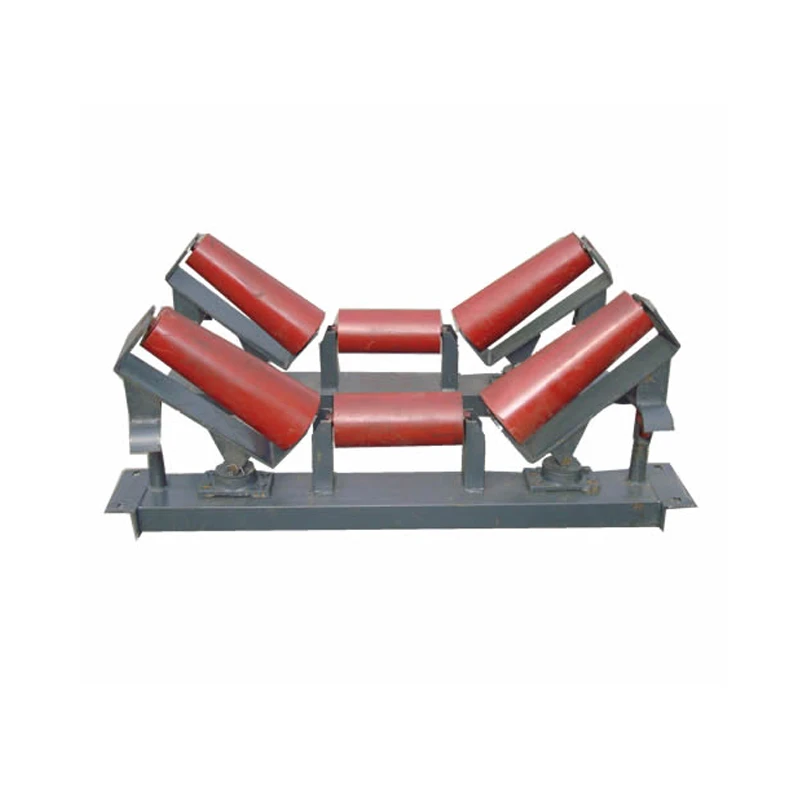
- The Friction Self-Aligning Bracket is a bracket-and-roller assembly: a complete structural unit consisting of a drum, shaft, and supporting frame. Its geometry is optimized to fit standard conveyor frame widths while providing rigidity through precision-welded joints. The surface receives a corrosion-resistant treatment.
- The Self Aligning Friction Roller is described as a mechanical structure composed of a drum, shaft, and bracket. It is suitable for various conveyor types—whether long or longitudinal—and is designed for straightforward integration without specialist equipment.
- Both products support the full range of conveyor industries: mining, power, metallurgy, chemical, grain, construction, ports, and docks, as confirmed in the product descriptions.
4. Maintenance Requirements and Service Life
Long service intervals reduce downtime and total cost of ownership.
- The Friction Self-Aligning Bracket is designed for ease of maintenance; the product description specifically notes that maintenance access is a design goal.
- The Self Aligning Friction Roller features a rubber surface that makes replacement and maintenance relatively convenient, requiring almost no special tools or equipment. The strong adhesion of the rubber layer to the roller body extends service intervals by reducing premature detachment.
- Both products contribute to extending overall belt life: the bracket does so by reducing abnormal friction between belt and roller, and by preventing the lateral forces that accelerate edge wear.
Applicable Products from Hebei Roule Transport Machinery Manufacturing Co.,Ltd
Friction Self-Aligning Bracket For Belt Conveyor
This bracket assembly is the primary structural solution for belt correction in demanding environments. Key confirmed attributes include:
- Friction-based angular correction mechanism: automatically adjusts roller angle in response to belt lateral displacement
- Strong support structure with high flexibility and low friction
- Patented V-shaped discharge structure for coal slurry environments
- Corrosion-resistant material options (stainless steel, alloys) for mining, port, and chemical applications
- Precision-welded high-strength steel construction with corrosion-resistant surface treatment
- Buffer roller option for impact absorption in mining transport
- Targeted wear reduction to extend conveyor belt and drum service life
Best fit: High-load, continuous-operation conveyors in mining, coal transport, ports, and cement where dynamic belt alignment is required and environmental exposure is severe.
Self Aligning Friction Roller
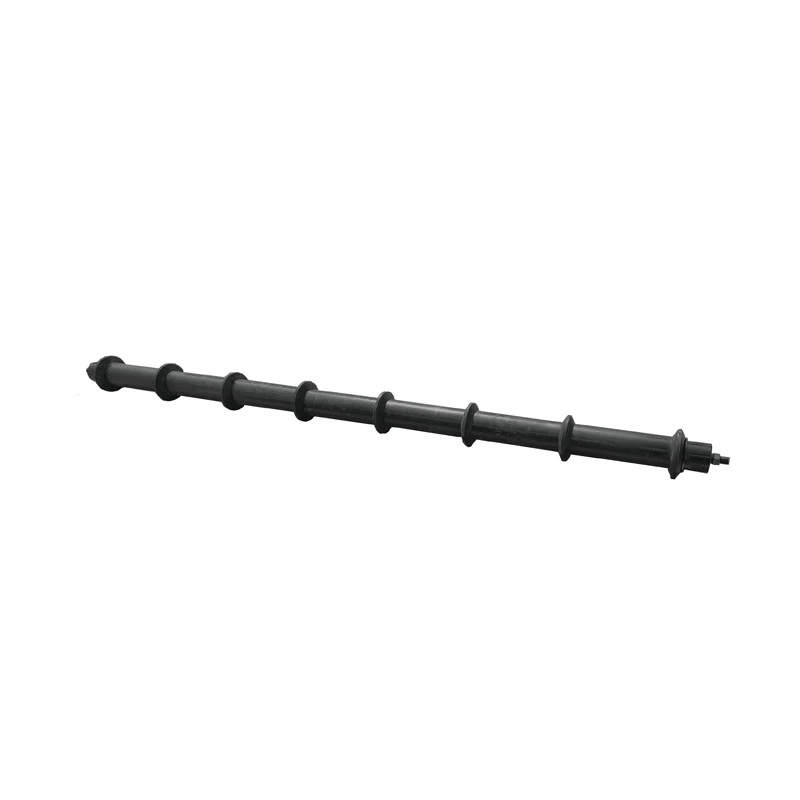
This roller-level component provides belt centering through rubber surface friction and drum curvature. Key confirmed attributes include:
- Rubber-coated drum with strong wear resistance and adhesion
- Correction mechanism based on friction resistance and roller curvature
- Wide adaptability across conveyor types (long, longitudinal, various belt widths)
- Maintenance-friendly design requiring no special tools
- Application across mining, power, metallurgy, chemical, grain, construction, ports, and docks
Best fit: Conveyors requiring a belt-surface correction force rather than a full structural bracket replacement; suitable when maintenance simplicity and multi-conveyor compatibility are priorities.
How Self Aligning Conveyor Rollers Interact with Other Belt Conveyor Components
A self aligning roller for belt conveyor operation does not work in isolation. Its effectiveness is influenced by the condition of adjacent components.
- Standard rollers and idlers: The carry and return rollers form the structural baseline that self-aligning components work against. Worn or eccentric standard rollers can introduce vibration that defeats the correction mechanism. Hebei Roule Transport Machinery Manufacturing Co.,Ltd produces a full range of belt conveyor rollers in diameters from φ60 to φ194 mm, providing compatible idler sets for correct integration.
- Belt cleaners: Material carryback from a sticky belt can adhere to rollers and cause the belt to track incorrectly, defeating self-alignment. A Nonloaded Cleanser installed at the return run removes carryback before it causes misalignment—complementing the function of self-aligning brackets and rollers.
- Gear reducer: Inconsistent belt tension caused by speed fluctuation can trigger lateral drift. A well-matched gear reducer that maintains stable belt speed reduces the frequency and magnitude of deviation events that self-aligning components must correct.
Selection Summary
| Criterion | Friction Self-Aligning Bracket | Self Aligning Friction Roller |
|---|---|---|
| Correction mechanism | Angular bracket adjustment via friction roller | Friction surface and drum curvature |
| Primary environment fit | Mining, coal, port, cement (severe conditions) | Mining, power, metallurgy, chemical, grain, ports |
| Structural form | Full bracket-and-roller assembly | Roller with integrated bracket |
| Impact absorption | Buffer roller option available | Wear-resistant rubber surface |
| Maintenance | Design-optimized for access | No special tools required |
| Key material options | Stainless steel, alloys, high-strength steel | Rubber-coated drum |
When both products are available, the Friction Self-Aligning Bracket is appropriate for applications where dynamic, continuous alignment correction is needed on high-load lines in harsh environments. The Self Aligning Friction Roller is appropriate where roller-level correction with minimal installation complexity is the priority.
Closing Guidance for Procurement Teams
Before finalizing a self aligning roller for belt conveyor procurement, confirm the following with your engineering or maintenance team:
- What is the primary cause of belt deviation? Uneven loading, structural frame flex, or variable tension each call for slightly different correction sensitivity.
- What is the operating environment? Confirm humidity level, dust exposure, and the presence of corrosive materials to select the appropriate surface treatment and material grade.
- What is the belt width and conveyor load class? Bracket geometry and roller diameter must match the installed frame dimensions.
- What maintenance access is available? Systems with limited access points benefit from the tool-free maintenance design of the friction roller; bracket assemblies should be positioned where periodic angle inspection is feasible.
- Are there adjacent components in good condition? Worn standard rollers or a dirty belt undermine any self-alignment solution.
For specific configuration guidance, contact Hebei Roule Transport Machinery Manufacturing Co.,Ltd with your conveyor specification sheet.
THE PEOPLE

About the author
THE COMPANY
Hebei Roule Transport Machinery Manufacturing Co.,Ltd
Hebei Roule Conveyor Machinery Manufacturing Co., Ltd. is a strong factory specializing in research and development, design, production, and sales. Since its establishment in 2010, we have been striving for excellence and committed to the development of the conveyor machinery industry. Our company specializes in roller series, conveyor belt series, conveyor belt series, drum series, and supporting conveyor machinery accessories.…
About Us ↗Visit company website ↗YOUR NEXT STEP
Bring your brief. Start a useful conversation.
Use case, specification, quantity and delivery window: make the next conversation specific.