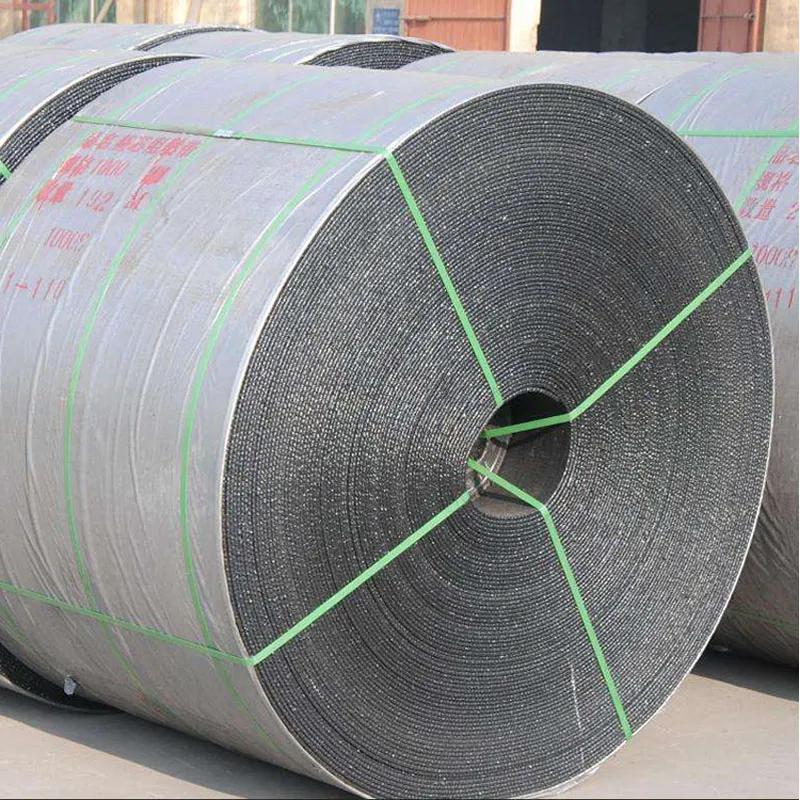
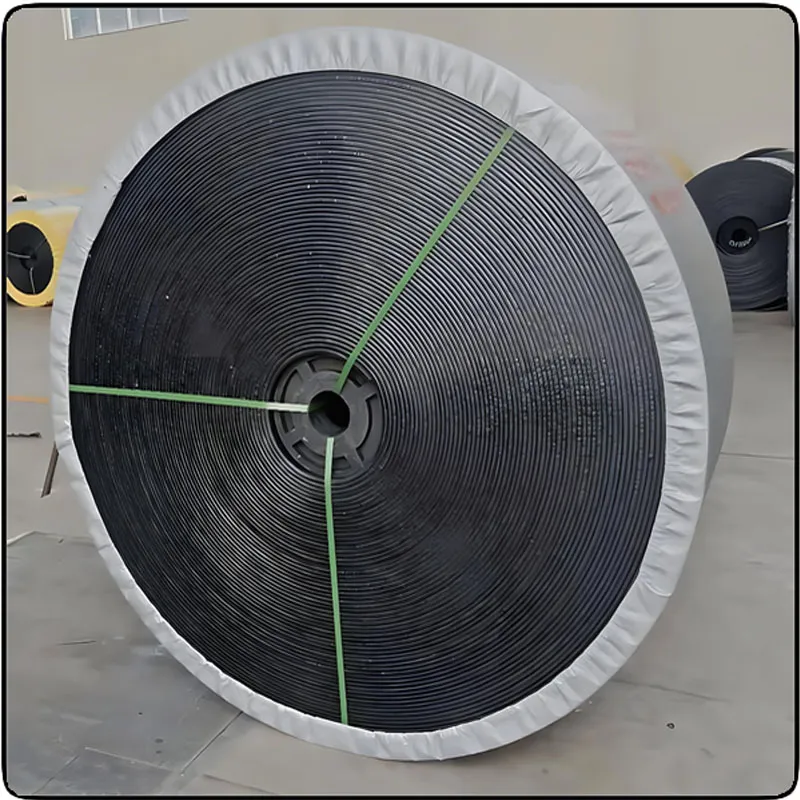
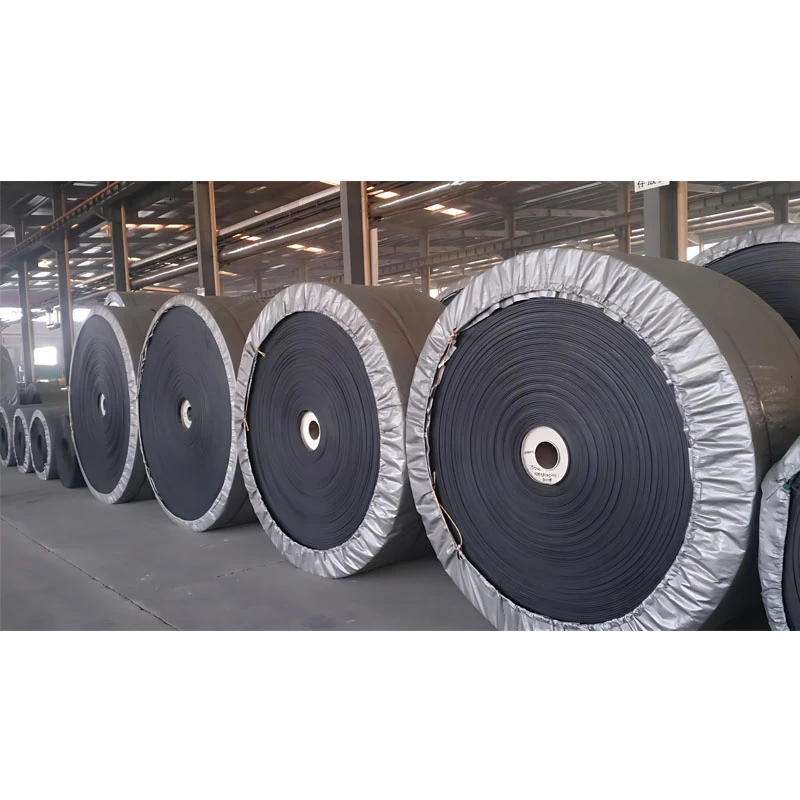
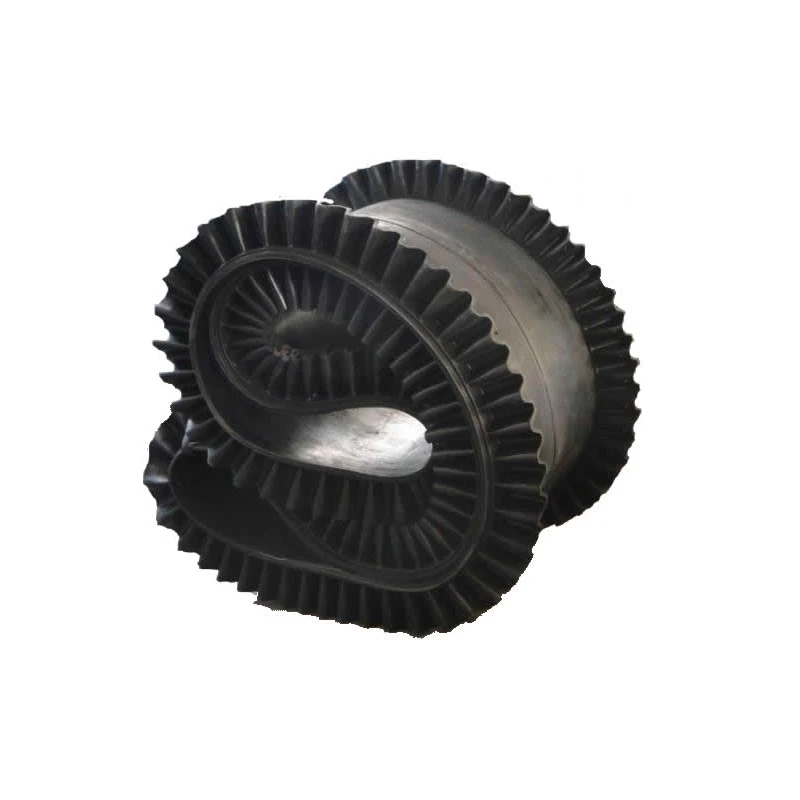
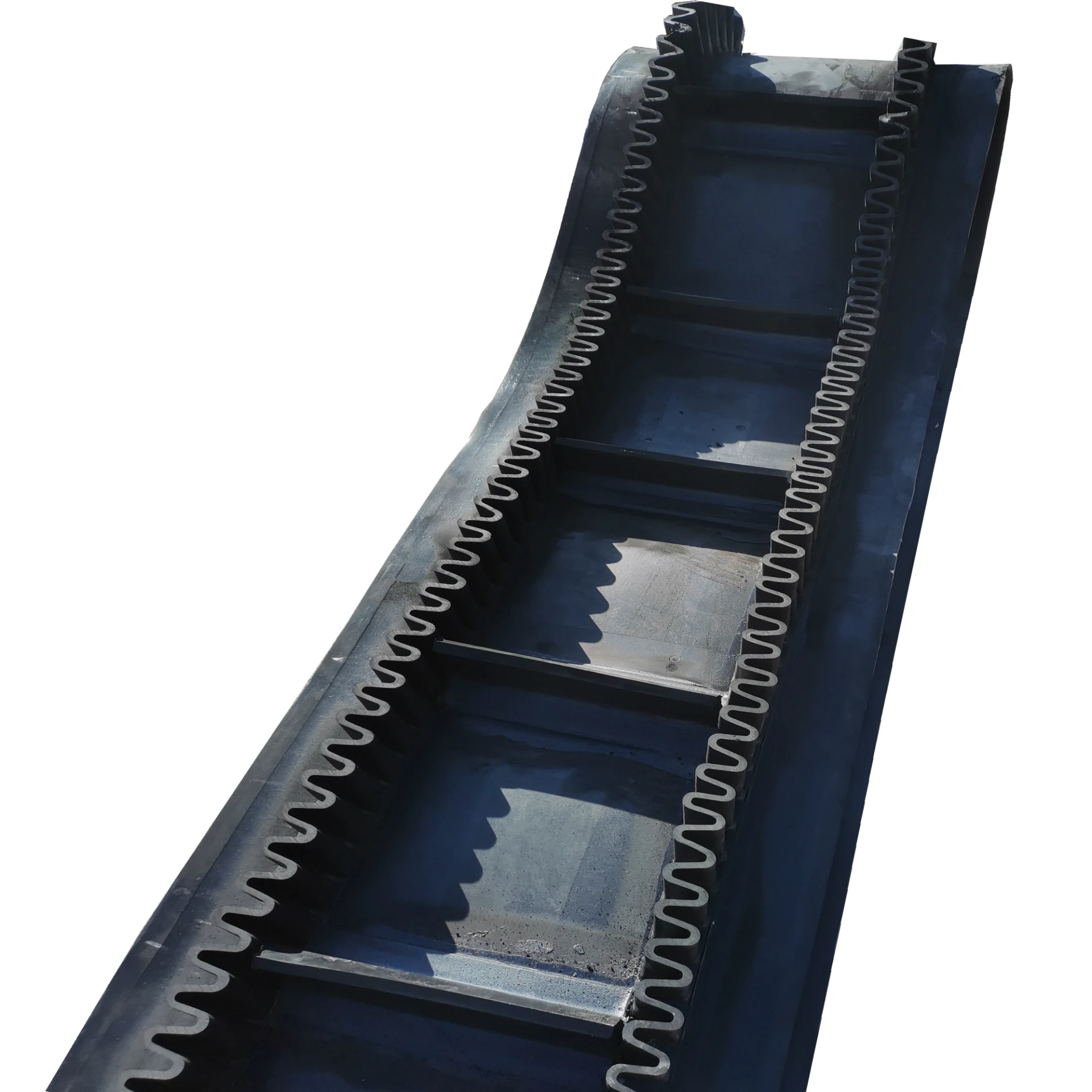
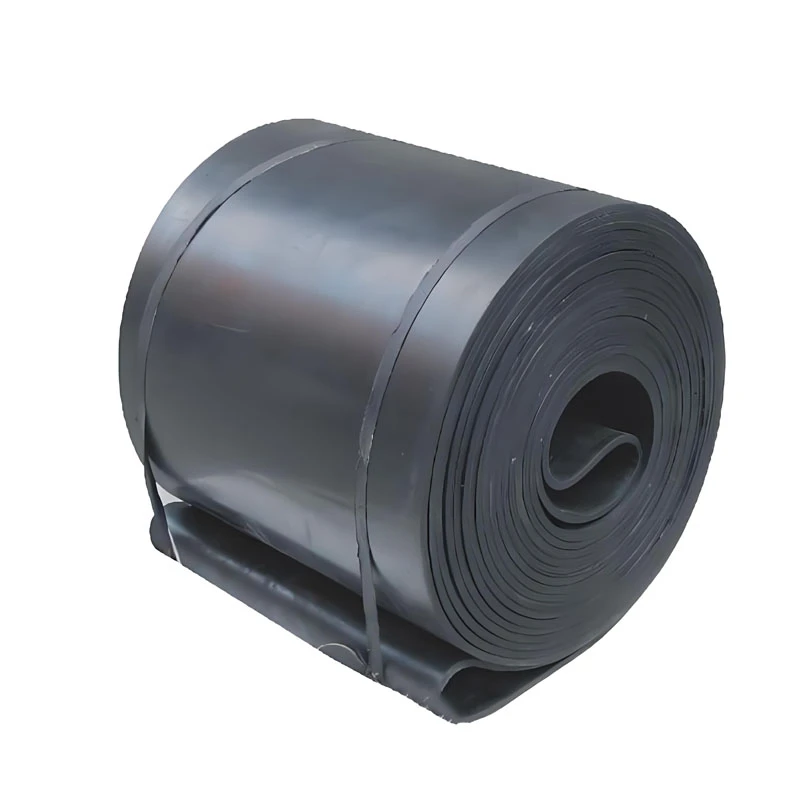
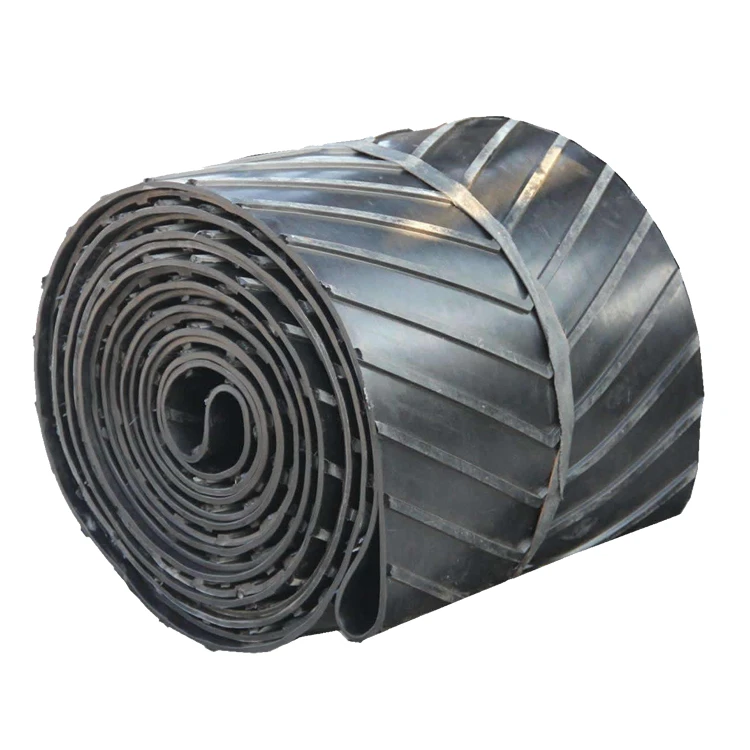
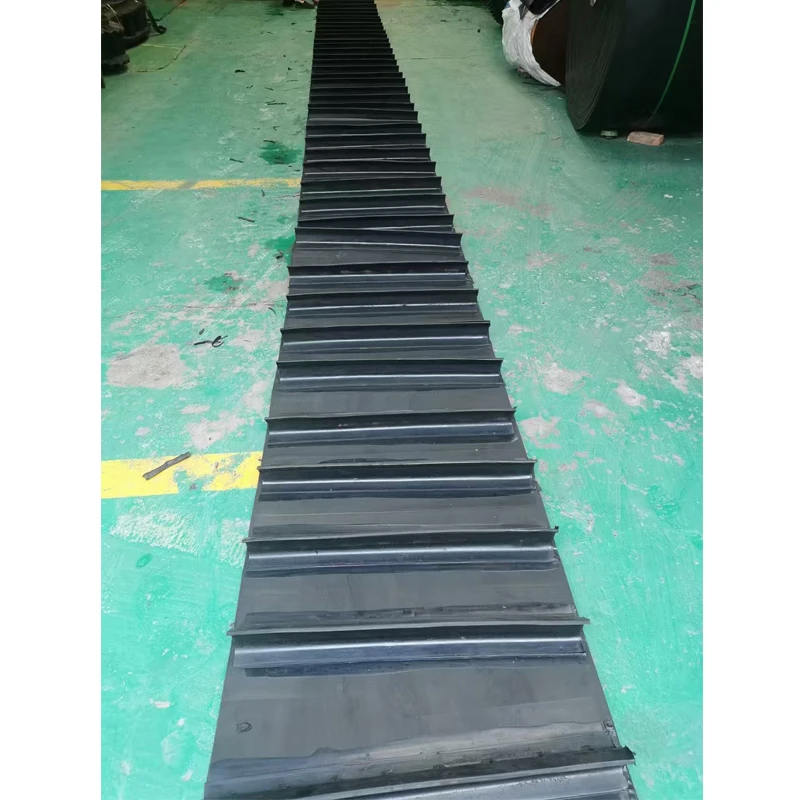
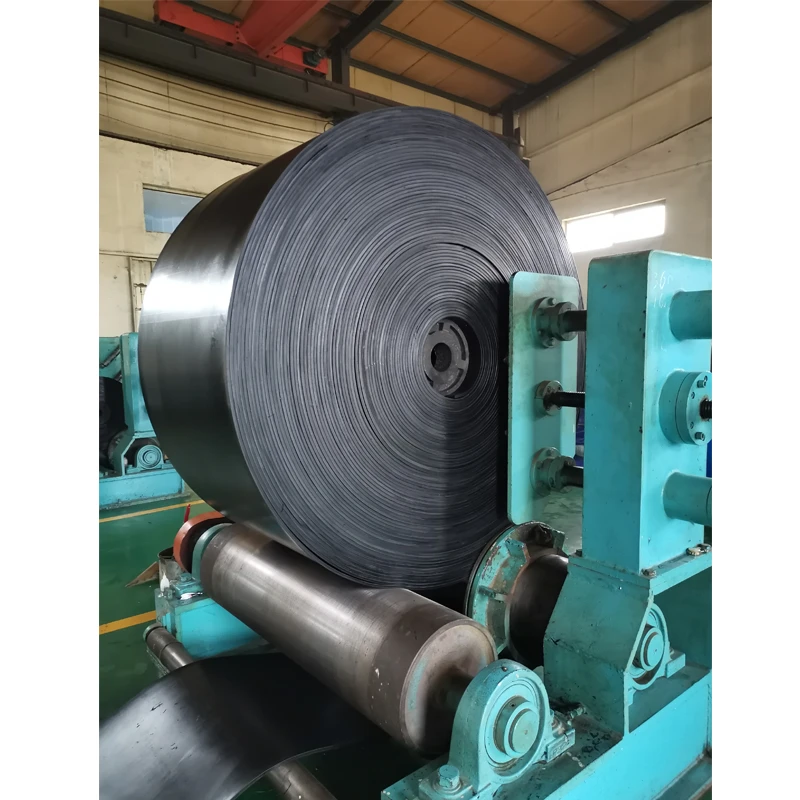
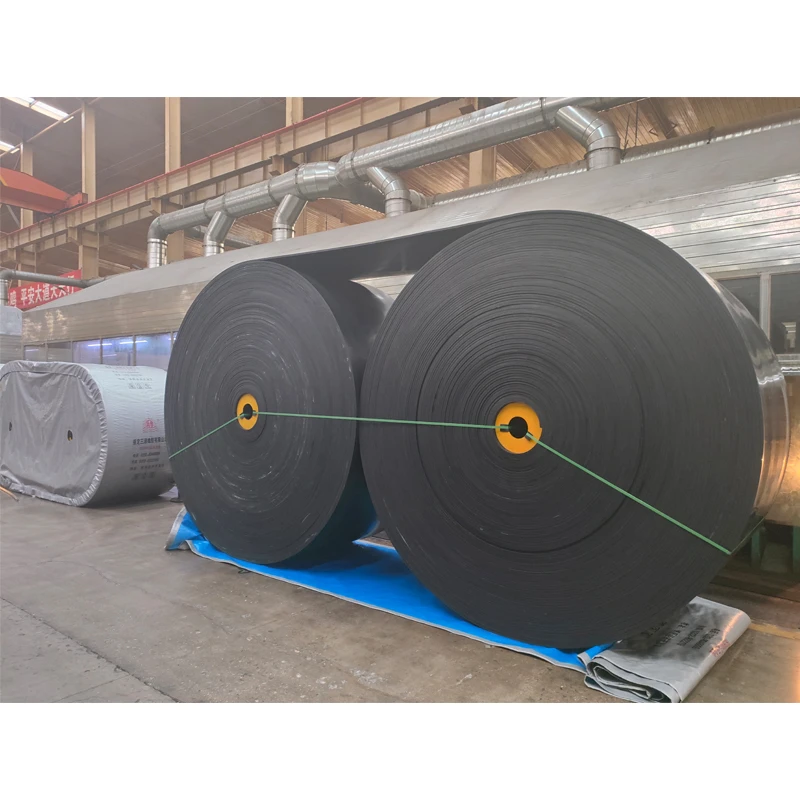
The flame-retardant conveyor belt is mainly suitable for underground transportation in coal mines, and can also be used for material transportation in metallurgy and chemical industries. The whole core flame-retardant conveyor belt can be divided into PVC type and PVG type.
Flame retardant conveyor belt, also known as whole core flame retardant conveyor belt, is made by impregnating and plasticizing or vulcanizing the whole belt core with polyvinyl chloride impregnated paste. It has the characteristics of high strength, large capacity, and balanced transportation. At the same time, this product has good flame retardant, anti-static, impact resistant, wear-resistant, and corrosion-resistant properties. The upper and lower covering layers of PVC type are both made of PVC cover adhesive, with single-sided adhesive ≥ 0.8mm; The upper and lower covering layers of PVG type are both made of nitrile rubber and PVC, with a thickness of 1.5mm-4.5mm on one side. PVC conveyor belts with an inclination angle of less than 16 ° and PVG conveyor belts with an inclination angle of less than 20 ° can both be used for transportation above and below coal mines.
Production process of flame-retardant conveyor belt: drying → plasticizing → compounding → mixing → parking → hot refining → rolling → forming → vulcanization → packaging. Unlike non nylon skeleton conveyor belts, the production process of nylon layered flame-retardant conveyor belts requires secondary stretching and shaping treatment after vulcanization. There are two main methods for secondary stretching and shaping: one is the cooling and shaping method under mold pressure (hereinafter referred to as mold shaping), and the other is the stretching and cooling shaping method outside the mold (hereinafter referred to as mold shaping). The method of in mold shaping is simple and the shaping effect is good. However, using this method for shaping consumes a lot of energy and has low production efficiency. In contrast, although the external molding method requires an additional set of stretching devices, the product quality is reliable and the production efficiency is high after using this method, making it suitable for large-scale production.
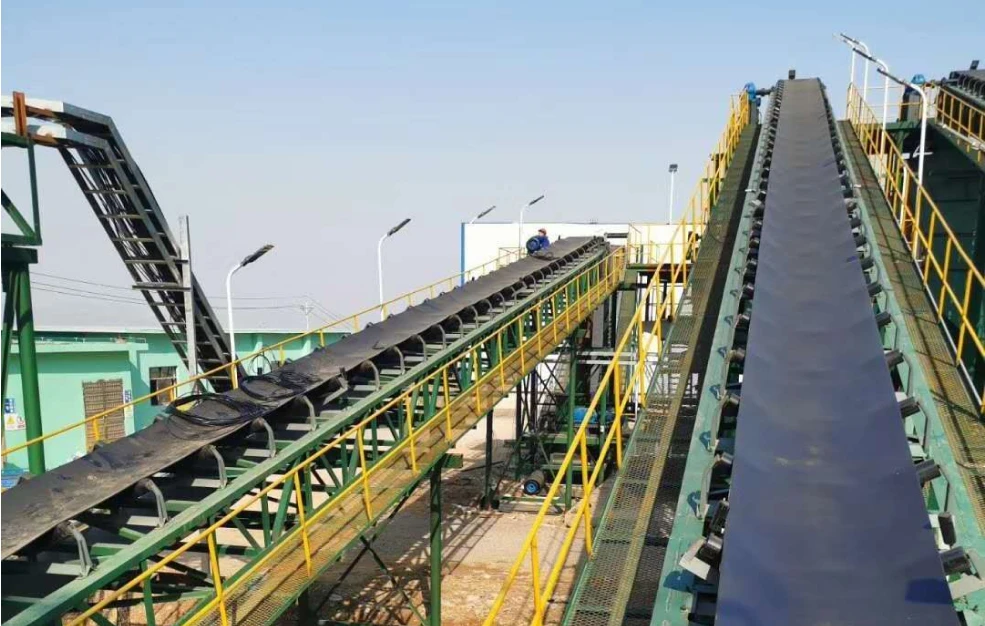
In industries where heat, sparks, and friction are part of daily operations, safety begins with the smallest yet most critical components — the conveyor belts. The fire resistant conveyor belt plays a decisive role in protecting production lines from fire hazards, especially in coal mines, power plants, steel mills, and chemical facilities. Unlike ordinary conveyor belts that can ignite and spread flames, this advanced product is engineered to delay combustion, resist flame propagation, and maintain operational stability even under extreme conditions.
Hebei Roule Conveyor Machinery Manufacturing Co., Ltd., founded in 2010, has dedicated itself to creating conveyor solutions that combine durability with safety. As one of the experienced fire resistant conveyor belt manufacturers, the company emphasizes engineering precision, strict quality control, and long-term reliability. Each belt is produced through advanced vulcanization processes and formulated with specialized flame-retardant rubber compounds that significantly slow down burning rates.
What sets Roule’s whole core structure apart is its uniform bonding layer between the rubber cover and core. This innovative design ensures high adhesion strength and prevents delamination under high temperature or impact stress. Even when exposed to an open flame, the belt self-extinguishes once the heat source is removed — a feature verified through multiple fire resistance tests based on international standards.
Performance consistency is another critical advantage. Roule’s belts demonstrate exceptional tensile strength, allowing them to withstand heavy loads without deformation. They also resist tearing and abrasion, reducing the risk of mechanical failure in high-stress environments. The smooth, anti-static surface of the belt helps to dissipate static electricity generated during material movement, further minimizing the chance of ignition.
Maintenance and service life are equally impressive. The fire resistant conveyor belt requires minimal upkeep thanks to its integrated core structure that eliminates layers prone to separation. This durability translates to longer operational intervals and lower replacement costs, offering industries both safety and economy in a single solution.
For operators who prioritize both productivity and worker protection, Roule’s belt is more than a product — it’s a commitment to safety-driven performance. With a 6,000-square-meter factory, advanced equipment, and a skilled technical team, Hebei Roule Conveyor Machinery Manufacturing Co., Ltd. continues to supply belts that redefine industrial reliability in some of the world’s most challenging work environments.
In today’s industries, safety is not only a regulatory requirement but also a vital component of operational sustainability. The fire retardant conveyor belt offers a perfect intersection between high-performance material handling and fire protection compliance. Built with scientifically formulated rubber compounds, this belt prevents flame spread while maintaining full mechanical performance, ensuring that efficiency never comes at the cost of safety.
The whole-core design gives the belt structural integrity that resists cracking, delamination, and premature wear. The rubber compound is embedded with flame-retardant agents and anti-static properties, which protect against electrical discharge and thermal decomposition. During normal operation, the belt can handle intense friction and temperature changes without losing flexibility or surface grip. Even when exposed to sparks or high ambient heat, it self-extinguishes quickly, limiting fire damage and keeping the system intact.
For industries like coal mining, ports, and metallurgy — where safety inspections are stringent — Roule’s fire retardant conveyor belt meets and exceeds both domestic and international testing standards. Each product is subjected to flame propagation, drum friction, and anti-static performance tests to ensure reliability before delivery. These quality control steps are implemented using precision machinery and inspection protocols within the company’s modern 6,000-square-meter production facility.
Economic performance is also central to Roule’s product philosophy. The belt’s long service life significantly reduces downtime, and its energy-efficient design minimizes the strain on conveyor motors. This results in lower power consumption and operational costs over time. The flat, low-resistance surface reduces product wear, while its core reinforcement enables stable operation under heavy loads.
Flexibility in customization further enhances its value. Depending on the client’s needs, Roule engineers can adjust the belt’s cover thickness, tensile strength, and surface texture to match specific applications. This adaptability makes it suitable for industries ranging from mining conveyors to large-scale logistics centers.
The fire retardant conveyor belt represents the ideal balance between technical excellence and safety assurance. With over a decade of expertise and continuous R&D investment, Hebei Roule Conveyor Machinery Manufacturing Co., Ltd. provides not just a belt, but a safety system — one that helps businesses operate confidently in hazardous conditions while meeting strict safety standards worldwide.
While the terms “flame retardant” and “flame resistant” are often used interchangeably, their technical distinctions reveal critical insights into performance and safety. A flame retardant belt is specifically engineered to slow or stop the spread of fire through chemical reaction within the rubber compound. On the other hand, a flame resistant belt is designed to maintain its structure and function during direct flame exposure without melting, dripping, or releasing harmful gases. Hebei Roule’s whole core flame-retardant conveyor belt combines both features — prevention and endurance — delivering superior protection in hazardous environments.
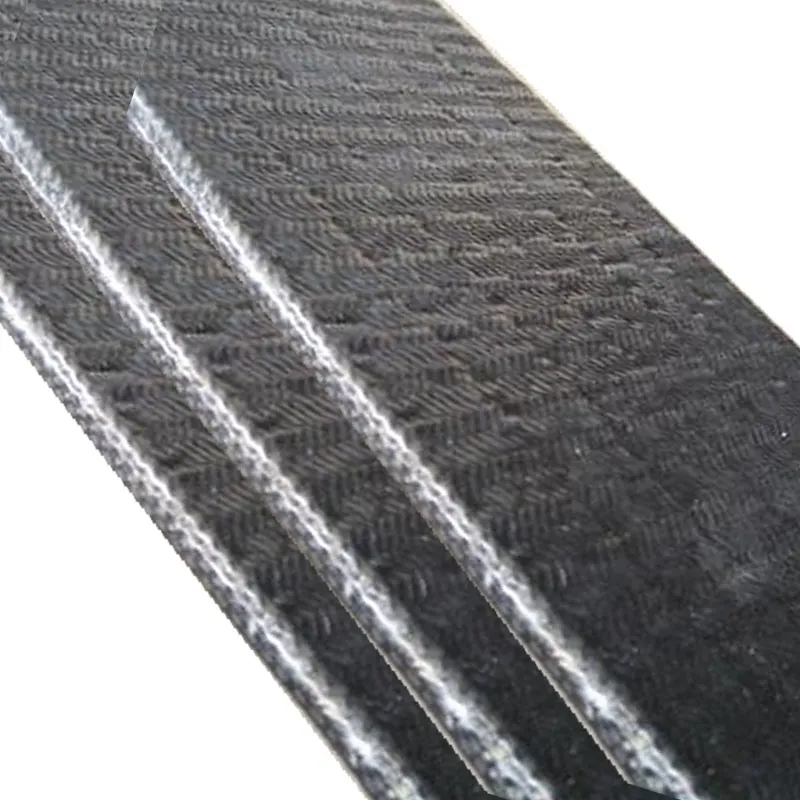
The whole-core construction eliminates the traditional layered fabric structure found in ordinary belts. Instead, the belt consists of a single, integrated carcass reinforced with high-tensile synthetic fibers. This design not only increases strength but also ensures even distribution of mechanical stress, preventing internal damage under heavy load. The rubber cover is blended with non-toxic flame inhibitors and anti-static additives, enabling safe operation in environments containing combustible dust or gas.
This dual protection means that even when a belt is directly exposed to open flames, it won’t continue burning once the source is removed. Its surface remains stable, and its mechanical properties are preserved, allowing quick recovery and resumption of operations. The belt’s ability to self-extinguish minimizes secondary fire risks and prevents conveyor line downtime, an invaluable advantage for mines, tunnels, and power facilities.
Performance-wise, Roule’s belts undergo extensive testing, including drum friction, flame spread, and heat resistance assessments. The results demonstrate a consistent balance between fire safety and mechanical durability. The belts operate smoothly with minimal elongation and maintain their flexibility even after prolonged use in high-temperature or abrasive environments.
From a business perspective, Roule’s integrated approach offers both economic and operational benefits. By producing all belts in-house with advanced equipment and precise quality standards, Hebei Roule Conveyor Machinery Manufacturing Co., Ltd. guarantees dependable quality at a competitive cost. Clients across mining, metallurgy, and transport industries value the belt’s consistent performance and low maintenance demands.
The innovation behind Roule’s flame retardant belt and flame resistant belt technologies reflects the company’s dedication to industrial safety and excellence. Through years of research, careful material selection, and continuous process optimization, Roule delivers conveyor belts that not only move materials — they move industries toward a safer, more sustainable future.
Unlike surface-treated alternatives, our whole-core design provides consistent flame resistance throughout the belt’s entire structure. It maintains strength and flexibility even under heavy loads, reducing the risk of tears or failures in critical operations.
Let's Get in Touch!
Send us a message and let our experts assist you with tailored solutions.