Tapered conveyor rollers represent a critical component in modern material handling systems, offering unique advantages in applications requiring controlled product flow and precise positioning. Their design, characterized by a reduction in diameter along the roller’s length, addresses challenges associated with conventional cylindrical rollers, especially when dealing with varied product sizes and irregular shapes. Understanding the principles and applications of tapered conveyor rollers is essential for optimizing efficiency, minimizing damage, and streamlining operations across diverse industries.
Globally, the demand for efficient logistics and automated handling solutions is surging, driven by e-commerce growth, increasing manufacturing complexity, and a need for cost reduction. This demand directly impacts the market for specialized conveyor components like tapered conveyor rollers. Statistics from the World Bank indicate a significant rise in global trade volume, further emphasizing the need for robust and adaptable material handling infrastructure. Tapered rollers address specific challenges in this landscape, offering superior control over product movement.
The increasing focus on Industry 4.0 and smart manufacturing is pushing the adoption of advanced conveyor systems. These systems require precise control and adaptability, qualities directly addressed by the unique functionality of tapered conveyor rollers. Investing in understanding and implementing these solutions becomes crucial for companies aiming to maintain a competitive edge in today's dynamic market.
Introduction to Tapered Conveyor Rollers
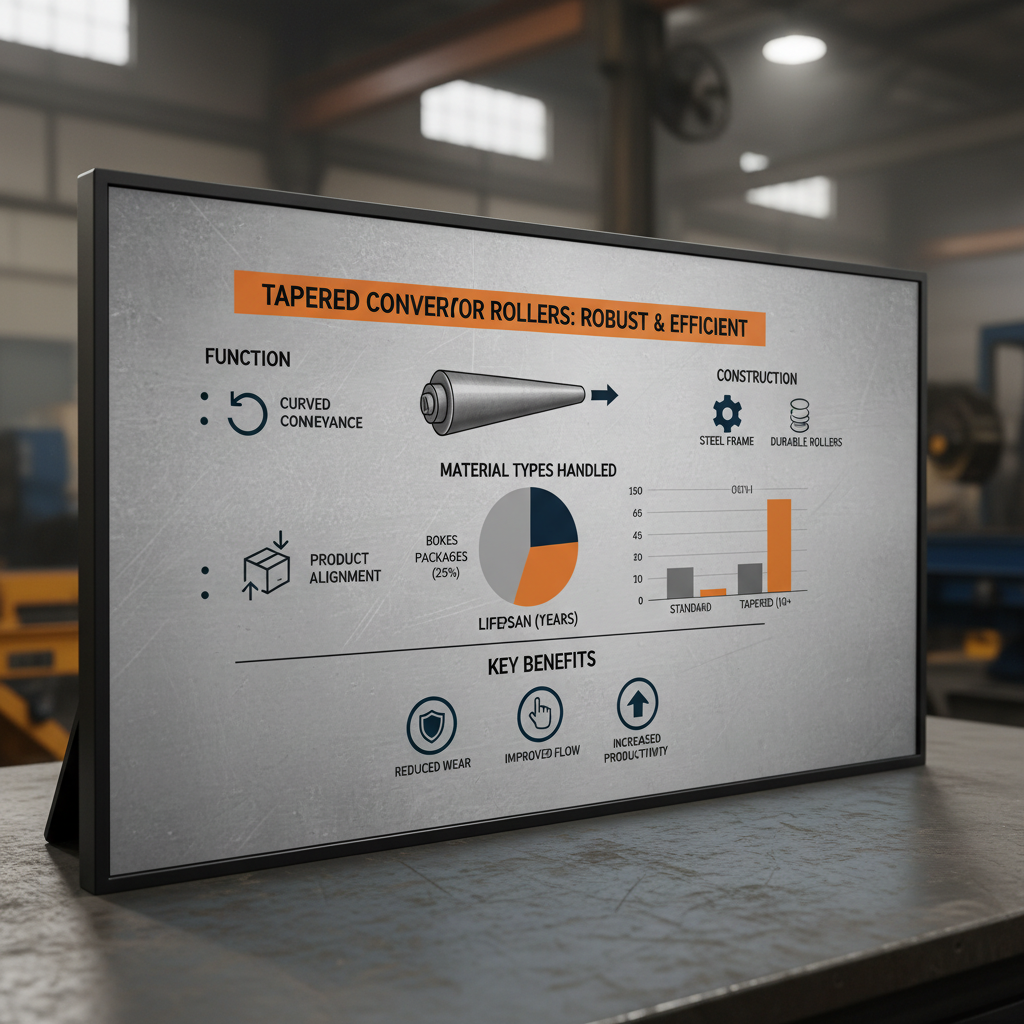
Tapered conveyor rollers are designed to address specific material handling challenges, particularly those related to guiding and centering products on a conveyor system. Unlike standard cylindrical rollers, the reduced diameter at one end of a tapered roller creates a gentle steering effect, automatically aligning products towards the center of the belt. This self-centering action minimizes the risk of jams, misalignments, and product damage, making them ideal for handling a wide range of materials. tapered conveyor rollers are often used in combination with standard rollers to achieve optimal performance.
This design is particularly valuable in applications where precise product orientation is crucial, such as in sorting systems, packaging lines, and automated assembly processes. The inherent self-correcting nature of tapered rollers reduces the need for complex control systems and manual intervention, leading to increased efficiency and reduced operational costs. Their adaptability makes them a valuable component in diverse industrial settings.
Defining Tapered Conveyor Rollers
Tapered conveyor rollers are cylindrical rollers that are machined to have a decreasing diameter along their length. This intentional taper is the defining characteristic that differentiates them from traditional cylindrical rollers. The taper angle, typically subtle, is carefully calculated to provide the desired degree of centering force without causing excessive friction or instability. The design allows for the gentle guidance of products along the conveyor belt, ensuring they remain aligned and moving smoothly.
In essence, tapered rollers harness the principle of geometric constraint to achieve automatic product centering. As a product encounters the tapered surface, it experiences a slight lateral force that encourages it to move towards the center of the conveyor. This is a passive system, requiring no external power or control mechanisms, contributing to its reliability and ease of implementation.
The connection to modern industry stems from the increasing demand for automation and precision in material handling. As manufacturers strive to improve efficiency, reduce errors, and minimize labor costs, they are turning to intelligent components like tapered conveyor rollers to optimize their processes. These rollers help maintain a consistent and controlled flow of materials, which is crucial for seamless integration with other automated systems.
Key Characteristics of Tapered Rollers
Precision Machining: The accuracy of the taper is paramount. Precise machining ensures consistent centering force and prevents unwanted side loads. Tolerances are carefully controlled to maintain performance and minimize wear. This is essential for applications requiring accurate product placement.
Material Selection: Tapered conveyor rollers are commonly manufactured from durable materials such as steel, stainless steel, and engineering plastics. The choice of material depends on the application’s requirements, considering factors like load capacity, temperature resistance, and corrosion resistance. tapered conveyor rollers can be customized with different coatings to enhance durability and reduce friction.
Low Friction Surface: A smooth surface finish is critical to minimize friction and ensure efficient product movement. Coatings and polishing techniques are employed to reduce drag and prevent damage to conveyed materials. The reduced friction also contributes to energy efficiency.
Performance Metrics of Tapered Rollers
Evaluating the performance of tapered conveyor rollers requires considering several key metrics. One crucial factor is the Centering Force, which measures the lateral force applied to a product to guide it towards the center of the conveyor. Higher centering force results in faster and more reliable alignment, but can also increase friction. Another important metric is Friction Coefficient, which determines the ease with which products slide over the rollers. Lower friction minimizes energy consumption and reduces wear and tear.
Load Capacity is also essential, representing the maximum weight the rollers can safely support without deformation or failure. This is closely related to the material used and the roller’s dimensions. Finally, Wear Resistance assesses the rollers’ ability to withstand prolonged use and maintain their performance over time. This is particularly important in harsh environments where abrasive materials are conveyed.
Tapered Conveyor Roller Performance Comparison
Global Applications of Tapered Conveyor Rollers
Tapered conveyor rollers find widespread application across numerous industries globally. In the logistics and warehousing sector, they are used in sorting systems to direct packages to the correct destinations. In manufacturing, they are vital in assembly lines, ensuring accurate positioning of components. The food and beverage industry utilizes them in packaging and processing lines where hygienic handling is paramount. Across Europe, automation trends are driving adoption in large distribution centers.
In pharmaceutical manufacturing, tapered rollers contribute to precise and contamination-free product handling. Similarly, in the automotive industry, they assist in assembling complex components with high accuracy. In remote industrial zones of Australia, where maintaining smooth operations is crucial due to logistical challenges, tapered rollers help minimize downtime.
Furthermore, in post-disaster relief operations, adaptable conveyor systems incorporating tapered rollers can be rapidly deployed to efficiently sort and distribute aid supplies. The robust design and ease of maintenance make them suitable for challenging field conditions. The growing trend towards e-commerce fulfillment centers throughout Asia, particularly in China and India, represents a significant growth market for these specialized rollers.
Long-Term Value and Benefits
The advantages of implementing tapered conveyor rollers extend beyond initial operational improvements. The reduced risk of product damage translates into significant cost savings by minimizing waste and rework. Improved system reliability reduces downtime, boosting productivity and profitability. The decreased need for manual intervention lowers labor costs and frees up personnel for more complex tasks. The inherent self-centering action of tapered rollers enhances overall system safety by preventing jams and misalignments.
From a sustainability perspective, the reduced friction associated with tapered rollers contributes to energy efficiency, lowering carbon emissions and reducing operational expenses. The durability and long service life of these rollers minimize the need for frequent replacements, reducing waste and contributing to a more circular economy. Moreover, the improved accuracy and reliability instill trust in the material handling process, enhancing customer satisfaction and strengthening brand reputation.
Future Trends in Tapered Roller Technology
The future of tapered conveyor rollers is poised for innovation, driven by advancements in materials science, sensor technology, and data analytics. Researchers are exploring the use of self-lubricating materials to further reduce friction and extend roller lifespan. Integration with smart sensors and IoT platforms will enable real-time monitoring of roller performance, allowing for predictive maintenance and optimized system operation. The development of lightweight, high-strength materials will improve energy efficiency and load capacity.
Digital twin technology will play a crucial role in simulating and optimizing conveyor system layouts, including the placement and configuration of tapered rollers. This allows for virtual testing and refinement of designs before physical implementation, minimizing risks and maximizing performance. The increasing emphasis on sustainability will drive the adoption of eco-friendly materials and manufacturing processes.
Furthermore, advancements in automation and robotics will necessitate even more precise and reliable material handling solutions, further solidifying the role of tapered conveyor rollers in the future of logistics and manufacturing. We can also expect to see increased personalization and customization of rollers tailored to specific application needs.
FAQS
Tapered rollers offer self-centering capabilities, reducing product misalignment and jams. This leads to less damage, smoother operation, and lower maintenance compared to standard cylindrical rollers. They’re especially beneficial for handling varied product sizes or those requiring precise positioning. The gentle guiding action is a key differentiator, decreasing the need for complex control systems.
Common materials include steel, stainless steel, and various engineering plastics. Steel provides high load capacity, while stainless steel offers corrosion resistance. Plastics are lightweight and suitable for sensitive products. The material’s hardness, friction coefficient, and resistance to wear all significantly affect the roller’s performance, longevity, and suitability for specific applications.
A steeper taper angle generates a stronger centering force, resulting in faster and more decisive alignment. However, a steeper angle can also increase friction and potentially damage delicate products. The optimal taper angle is determined by the size, weight, and fragility of the conveyed materials, as well as the desired speed and accuracy of the system.
Routine maintenance generally involves regular cleaning to remove debris and buildup, and periodic inspection for wear and tear. Lubrication may be necessary depending on the roller material and operating conditions. Monitoring bearing performance is also crucial. Proactive maintenance can significantly extend the roller's lifespan and prevent costly downtime.
While tapered rollers can be used in high-speed systems, careful consideration must be given to the taper angle, roller material, and overall system design. Excessive speed can amplify the centering force and potentially cause product instability. Proper balancing and alignment are crucial for ensuring smooth and reliable operation at high speeds.
The lifespan of a tapered roller varies depending on factors like load, speed, operating environment, and maintenance schedule. However, with proper care, a well-maintained tapered roller can last for several years – typically 5 to 10 years or longer – in a standard industrial application. Regular inspections and timely replacements of worn components are key to maximizing its lifespan.
Conclusion
Tapered conveyor rollers represent a significant advancement in material handling technology, offering a robust and reliable solution for guiding and centering products on conveyor systems. Their inherent self-correcting mechanism minimizes damage, reduces downtime, and improves overall operational efficiency. The versatility of these rollers makes them applicable across a wide range of industries, contributing to streamlined processes and increased productivity.
Looking ahead, continued innovation in materials science, sensor technology, and data analytics will further enhance the performance and functionality of tapered conveyor rollers. Embracing these advancements will be crucial for companies seeking to optimize their material handling systems and maintain a competitive edge in the evolving landscape of logistics and manufacturing. To learn more about optimizing your conveyor systems with innovative solutions, visit our website: www.hgconveyorbelt.com.