- Tel: +8615128135888
- Email: hg@chinaconveyerbelt.com

Selecting a reliable partner among various conveyor belt manufacturers often determines the long-term operational efficiency of an entire production line. Whether dealing with abrasive minerals or corrosive chemicals, the specifications of the belt must align perfectly with the physical stresses of the environment to prevent premature failure.
In the current industrial landscape, the shift toward specialized materials—such as flame retardant or acid-resistant polymers—has transformed bulk material handling from a generic utility into a precision engineering requirement. This evolution forces operators to look beyond basic price points and evaluate the systemic durability of the entire conveying assembly.
Understanding the interplay between belt composition, roller support, and maintenance protocols is essential for minimizing downtime. By examining the technical benchmarks used by conveyor belt manufacturers, businesses can optimize their material flow and reduce total cost of ownership.


At its core, continuous conveying is about the managed transfer of energy and mass. The efficiency of this process depends on the synchronization between the conveyor drive, the belt tension, and the support rollers. If any single component fails to meet the load requirement, the system experiences slippage or catastrophic belt tearing.
Modern systems have moved toward modularity, allowing operators to integrate specific components like Ceramic Rollers for high-impact zones or PVC Conveyor Belts for lighter, cleaner applications. This shift allows for a more surgical approach to machinery design, reducing unnecessary material waste.
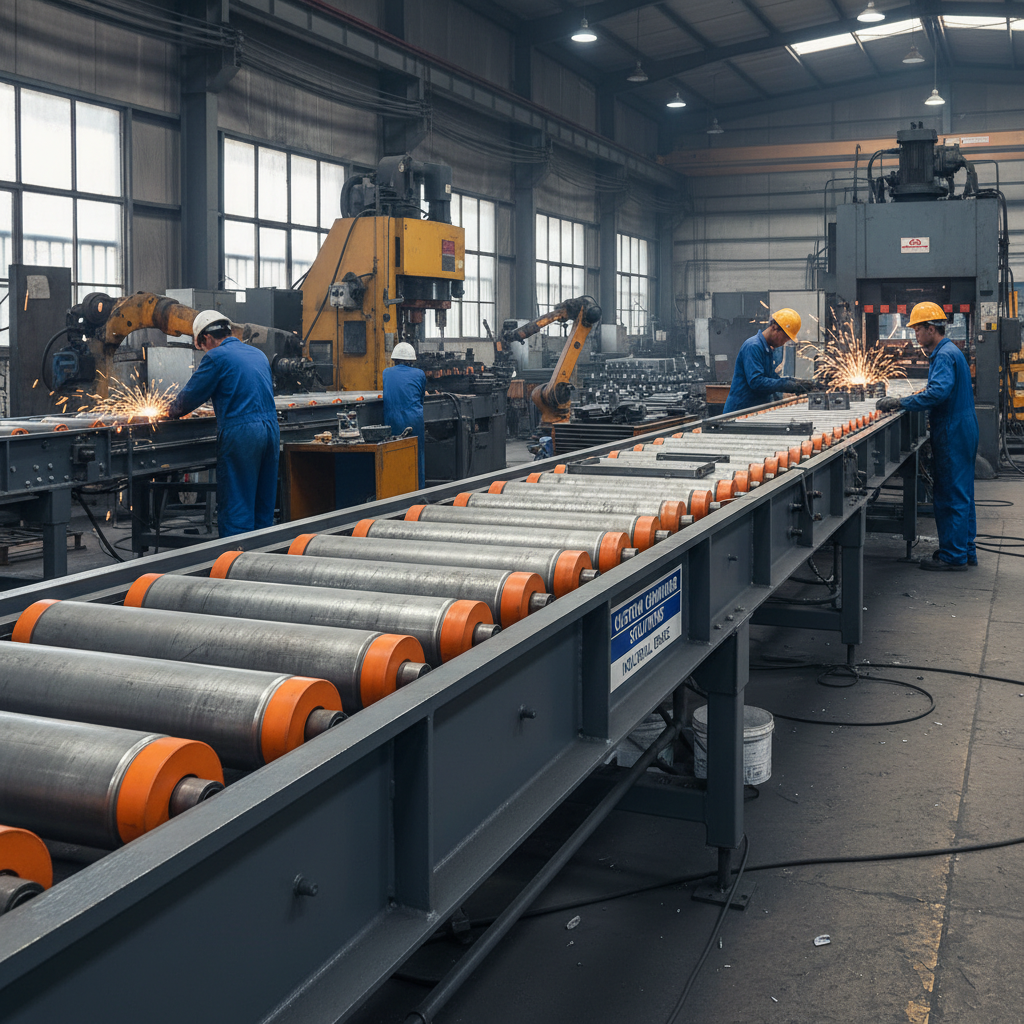
The stability of a conveyor system is not solely dependent on the belt but on the entire support architecture. Impact idlers are positioned at loading points to absorb the energy of falling materials, while self-aligning rollers prevent the belt from drifting, which would otherwise cause edge damage and material spillage.
From a design perspective, the choice of brackets—whether Stainless Steel Brackets for corrosive environments or standard Roller Brackets—impacts the overall lifespan of the assembly. Integrating specialized parts like Conveyor Iron Removers further protects the system by eliminating metallic contaminants before they can damage the belt surface.
The synergy between the conveyor drum and the drive system ensures that torque is applied evenly across the belt width. For high-angle transport, Large Inclination Conveyors utilize unique belt profiles to maintain material stability, proving that geometry is as important as material science in conveying logic.
One of the most overlooked aspects of conveyor maintenance is the integrity of the sealing rings within the roller tile boxes. These components protect the bearings from dust, moisture, and chemical ingress, which are the primary causes of bearing seizure.
Effective sealing requires a precise match between the sealing ring material—such as rubber or silicone—and the operating temperature, ensuring elasticity is maintained to prevent leaks and minimize internal friction.
To ensure longevity, the internal environment of the roller must be kept clean before installation. Regular lubricating oil replacement and the inspection of buffer rubber rings are non-negotiable steps in a professional maintenance schedule to prevent the "cascade failure" of multiple rollers.
When evaluating different belt types, the decision matrix usually revolves around three primary stressors: temperature, chemical exposure, and mechanical abrasion. A Heat-Resistant Conveyor Belt is mandatory for kiln operations, while an Acid and Alkali Resistant Conveyor Belt is the only viable option for chemical processing plants.
The following index illustrates the relative importance of specific material properties across different industrial sectors. This qualitative model helps buyers identify which performance characteristic should be prioritized during the procurement process.
In a typical mining setting, the primary concern is impact and abrasion. Here, the use of Strong Conveyor Belts paired with heavy-duty Impact idlers is critical. The system must withstand the sudden drop of heavy ores, requiring a belt with high tensile strength and a roller system that can deflect energy without distorting.
Conversely, in food-grade or pharmaceutical logistics, a Lightweight Conveyor utilizing PVC or specialized polymer rollers is preferred. The focus shifts from raw strength to hygiene and precision. In these scenarios, the use of Stainless Steel Rollers prevents oxidation and ensures the environment remains contaminant-free.
The industry is moving toward "smart conveying," where sensors are integrated directly into the rollers to monitor bearing temperature and vibration in real-time. This transition from reactive to predictive maintenance allows companies to replace a single bearing housing before it leads to a full belt failure.
There is also a significant push toward sustainable materials. New polymer blends are being developed that offer the same resistance as traditional rubbers but with a lower carbon footprint during production and easier recyclability at the end of the product lifecycle.
Furthermore, the integration of Mobile Conveyors and Telescopic Conveyors is increasing in ports and logistics hubs. These systems allow for flexible loading and unloading points, reducing the need for secondary transport vehicles and streamlining the entire supply chain.
When sourcing from conveyor belt manufacturers, procurement teams should utilize a weighted scoring model rather than focusing on the lowest unit price. A cheaper belt that requires replacement every six months is significantly more expensive than a premium belt that lasts two years.
Key indicators of a high-quality manufacturer include the presence of comprehensive quality management systems (such as ISO 9001) and product certifications (like CE). The ability to provide customized solutions—such as Flame Retardant Conveyor Belts for underground coal mining—demonstrates a deeper technical capability.
The table below provides a relative suitability framework to help operators match the right component type to their specific environmental challenges.
| Environment | Recommended Belt | Recommended Roller | Key Priority |
|---|---|---|---|
| High Acid/Alkali | Acid Resistant Belt | Stainless Steel Roller | Chemical Inertness |
| High Impact Zone | Strong Rubber Belt | Impact Idler | Energy Absorption |
| Extreme Cold | Cold Resistant Belt | Polymer Roller | Low-Temp Elasticity |
| Underground Mine | Flame Retardant Belt | Ceramic Roller | Fire Safety/Wear |
| General Logistics | PVC Conveyor Belt | Nylon Idler | Weight/Efficiency |
| High Temperature | Heat-Resistant Belt | Specialized Alloy Roller | Thermal Stability |
Quality is defined by the manufacturer's ability to adhere to international standards (ISO, CE, SGS) and their capacity for material specialization. A top-tier manufacturer doesn't just provide a belt; they offer an engineered solution where the belt material, reinforcement layers, and cover thickness are tailored to the specific chemical and mechanical stressors of the client's environment, ensuring predictable lifespans and reduced downtime.
Replacement intervals depend on the environment. In high-dust or corrosive settings, sealing rings should be inspected monthly and replaced at the first sign of aging or distortion. Because sealing rings are a low-cost component that protects high-cost bearings, a proactive replacement strategy—often aligned with annual lubrication cycles—is the most cost-effective way to prevent catastrophic roller failure.
Stainless steel rollers are the industry standard for corrosive environments due to their inherent resistance to oxidation and chemical attack. For extremely aggressive chemicals, polymer-coated rollers may be used. The choice depends on the specific pH levels of the environment and the load weight, as stainless steel offers superior structural strength compared to most polymer alternatives.
A carry roller is designed to support the belt and the load during transport, focusing on low rolling resistance and stability. An impact idler is specifically engineered for the loading point where material falls onto the belt; it typically features rubber rings or specialized cushioning to absorb the kinetic energy of the load, preventing the belt from stretching or tearing upon impact.
Generally, no. PVC belts are designed for light to medium-duty applications at ambient or moderate temperatures. High-temperature environments require specialized Heat-Resistant Conveyor Belts made from compounds like EPDM or specific rubber blends. Using PVC in high-heat zones will lead to softening, deformation, and eventual belt failure, potentially causing significant production delays.
Self-aligning rollers are designed to pivot around their axis. When the belt begins to drift to one side, it applies a lateral force to the roller, causing it to rotate. This rotation creates a resultant force that gently nudges the belt back toward the center of the conveyor frame. This automated correction reduces edge wear and prevents the belt from rubbing against the structure.
Optimizing a conveyor system is a continuous process of balancing material science with mechanical precision. By focusing on the synergy between the belt and its supporting components—from the smallest sealing ring to the largest drive drum—operators can achieve a state of operational reliability that significantly lowers long-term overhead.
As the industry moves toward smarter, more sustainable solutions, the role of specialized conveyor belt manufacturers becomes even more critical. Investing in high-specification components today is the only way to ensure that the infrastructure of tomorrow is capable of meeting the demands of global industrial growth.